
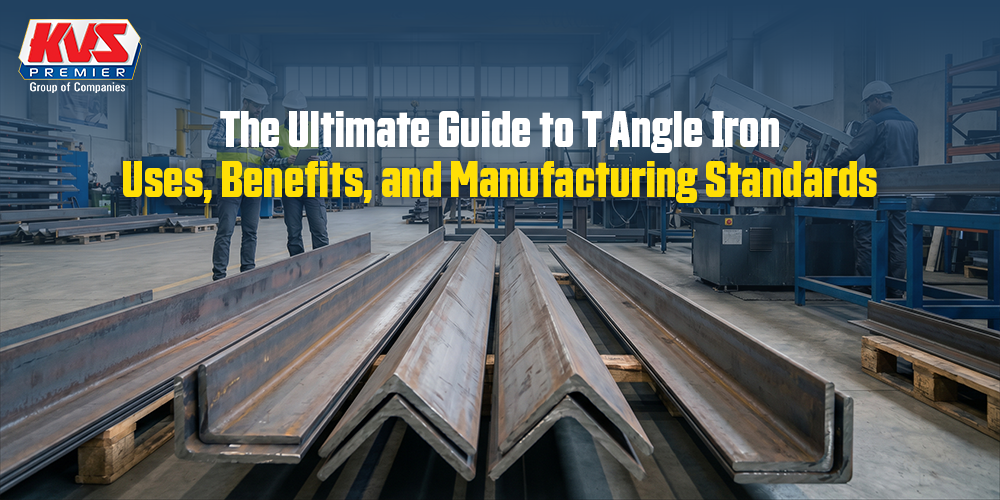
The Ultimate Guide to T Angle Iron: Uses, Benefits, and Manufacturing Standards
T angle iron is a T-shaped structural steel section
widely used in construction, fabrication, industrial structures, roof framing
systems, transmission towers, and infrastructure projects. Its combination of
strength, dimensional stability, and fabrication flexibility makes it a
preferred choice for applications requiring reliable load-bearing performance
and long-term durability.
What Is T Angle Iron?
T angle iron is a structural steel section consisting of a horizontal flange and a
vertical web, forming a T-shaped profile. This design provides excellent load
distribution and structural support, making it suitable for both construction
and industrial applications.
Manufactured from mild steel or structural steel grades, T angle iron is
commonly used where strength, stability, and dimensional accuracy are
essential. It is a key component in structural frameworks, fabrication
projects, machinery supports, utility structures, and industrial buildings.
KVS Premier, through Kashi Vishwanath Steels Pvt. Ltd., manufactures
structural steel products designed to meet the performance requirements of
modern infrastructure and engineering projects.
Where Is T Angle Iron Used?
Structural Frameworks
T angle iron is widely used in warehouses, workshops, industrial sheds, and
prefabricated structures. Its profile helps distribute loads efficiently while
maintaining structural integrity.
Infrastructure Projects
Bridges, transportation facilities, utility structures, and public
infrastructure projects frequently incorporate T angle iron due to its strength
and durability under demanding operating conditions.
Industrial Equipment
Machine frames, conveyor systems, equipment supports, storage racks, and
fabrication assemblies often use T angle iron because it can be
easily cut, welded, and fabricated.
Transmission Towers
Power transmission and utility structures require steel sections capable of
handling continuous loads and environmental exposure. T angle iron provides the
structural stability required for these applications.
Roof Framing Systems
Industrial and commercial roofing systems commonly use T angle iron for
support members and framing applications, helping create stable and durable
structures.
Fabrication Projects
From gates and fencing to brackets and custom metalwork, fabricators prefer
T angle iron because of its versatility and ease of processing.
Key Benefits of T Angle Iron
High Strength with Lower Weight
T angle iron offers an excellent strength-to-weight ratio, allowing engineers to
achieve structural performance without unnecessary material usage.
Easy Fabrication
The section can be cut, drilled, welded, and assembled efficiently, making
it suitable for a wide range of industrial and construction applications.
Corrosion Resistance
When galvanized or coated properly, T angle iron performs well in outdoor
and industrial environments where exposure to moisture and weather conditions
is common.
Dimensional Accuracy
Consistent dimensions help improve fitment, reduce installation challenges,
and support better structural performance.
Cost-Effective Construction
Compared to heavier structural sections, T angle iron often provides
an economical solution without compromising strength and reliability.
Improved Material Efficiency
Reducing material consumption without compromising structural strength
remains a key objective in construction projects. According to KVS Premier, its
MS Angles are engineered for superior strength and can help reduce steel consumption
by up to 25–30% in suitable applications. This contributes to improved material
efficiency and better project cost management.
Manufacturing Standards for T Angle Iron
The quality of structural steel directly impacts the safety and durability
of a project. Buyers should ensure that T angle iron complies with recognized
industry standards.
IS 808:1989
IS 808 specifies the dimensions and properties of hot-rolled structural
steel sections, including T-sections, angles, channels, and beams.
IS 2062:2011
IS 2062 defines the material requirements and grades for structural steel
used in engineering and construction applications.
BIS Certification
BIS certification serves as an important quality benchmark and indicates
compliance with established standards for safety, performance, and reliability.
Mill Test Certificates
Before procurement, buyers should verify Mill Test Certificates (MTCs) and
relevant quality documentation to confirm material specifications and
compliance.
How to Select the Right T Angle Iron
Section selection should be based on design load, span requirements,
structural calculations, and site conditions.
Smaller sections are generally used for fabrication work and light-duty
applications, while larger sections are preferred for industrial structures,
infrastructure projects, and heavy-load applications. Consulting a structural
engineer helps ensure the correct section size and grade are selected.
Why Choose KVS Premier?
KVS Premier, through Kashi Vishwanath Steels Pvt. Ltd., is recognized for
manufacturing high-quality structural steel products for construction,
infrastructure, and industrial applications.
The company follows strict quality control practices and modern
manufacturing processes to ensure dimensional accuracy, strength, and product
consistency. Its structural steel solutions are designed to support reliable
performance across a wide range of projects.
In addition to quality and reliability, KVS Premier focuses on
manufacturing efficiency-driven products that help engineers and contractors
optimize material utilization while maintaining structural performance.
Frequently Asked Questions
What is T angle iron used for?
T angle iron is used in structural frameworks, industrial equipment, transmission
towers, roof framing systems, fabrication projects, and infrastructure
developments.
Which standards apply to T angle iron in India?
IS 808 governs dimensions and section properties, while IS 2062 specifies
material grades for structural steel products.
Can T angle iron be used outdoors?
Yes. When properly galvanized or coated, T angle iron performs
effectively in outdoor and high-humidity environments.
How do I choose a reliable T angle iron manufacturer?
Look for manufacturers that comply with industry standards, provide quality
certifications, maintain strict quality control processes, and offer Mill Test
Certificates for their products.
Conclusion
T angle iron continues to be one of the most widely used structural steel sections
across construction, infrastructure, fabrication, and industrial projects. Its
strength, versatility, ease of fabrication, and cost-effectiveness make it a
practical choice for engineers, contractors, and fabricators.
The performance of any steel structure depends heavily on the quality and
consistency of the structural sections used during construction. By selecting
standards-compliant products from a trusted manufacturer such as KVS Premier,
project owners can achieve stronger structures, improved efficiency, and
long-term reliability.
Leave A Comment