
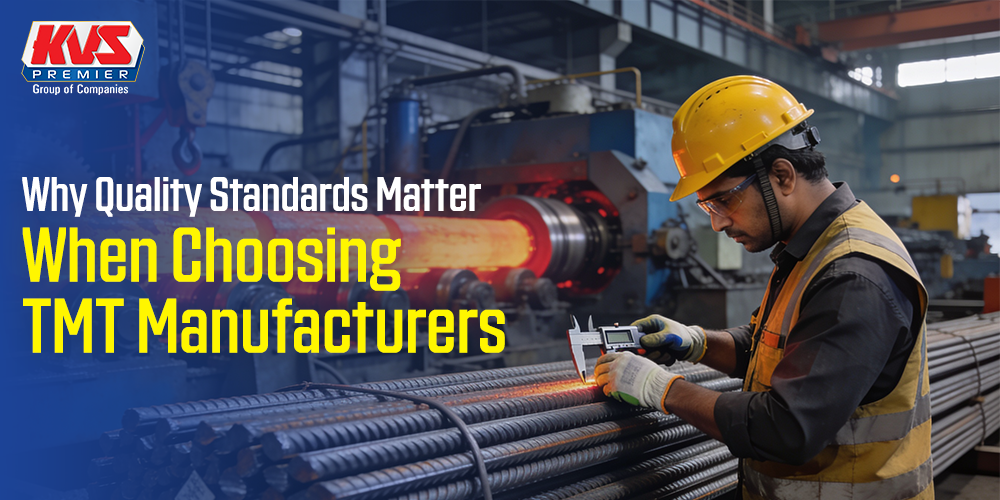
Why Quality Standards Matter When Choosing TMT Manufacturers
Quick Summary
- Steel quality decides a building’s real world safety, not the blueprint alone, which is why certified TMT manufacturers matter more than price per tonne.
- Choosing the right TMT manufacturers in India protects your building’s earthquake resistance, corrosion resistance, and long term structural life.
- Steel from an uncertified TMT bars manufacturer can look identical to premium bars while behaving very differently under real structural stress.
- Cheap, unbranded TMT bars may save money upfront but cost far more later in repairs, reinforcement failures, and safety risk.
- KVS builds every bar to certified TMT manufacturers standards, so quality is engineered in from the start, not just claimed on a spec sheet.
Key Pointers Before You Buy
- Always ask for the mill test certificate (MTC) before accepting delivery.
- Check for ISI certification and a consistent rib pattern on every bar.
- Compare Fe 500, Fe 500D, and Fe 550D grades based on your project’s seismic zone.
- Avoid suppliers who can’t explain their quenching and self tempering process.
- Prefer a TMT bars manufacturer with a traceable, batch wise testing record.
A building doesn’t fail on the day it’s inaugurated. It fails quietly, years later, when nobody’s watching. A hairline crack widens after one too many monsoons, and a beam flexes just a little more than the drawing said it should. By the time anyone notices, the story has already been written, and it was written the day someone chose which steel to pour into the foundation.
That’s the part people forget when they’re comparing quotes from different TMT manufacturers. Steel looks the same in a photo. It doesn’t look the same under a seismic load twenty years from now. This is exactly why quality standards, not just price per tonne, should be the first filter you apply when shortlisting a supplier for your next project.
What Actually Separates Good TMT Manufacturers From the Rest
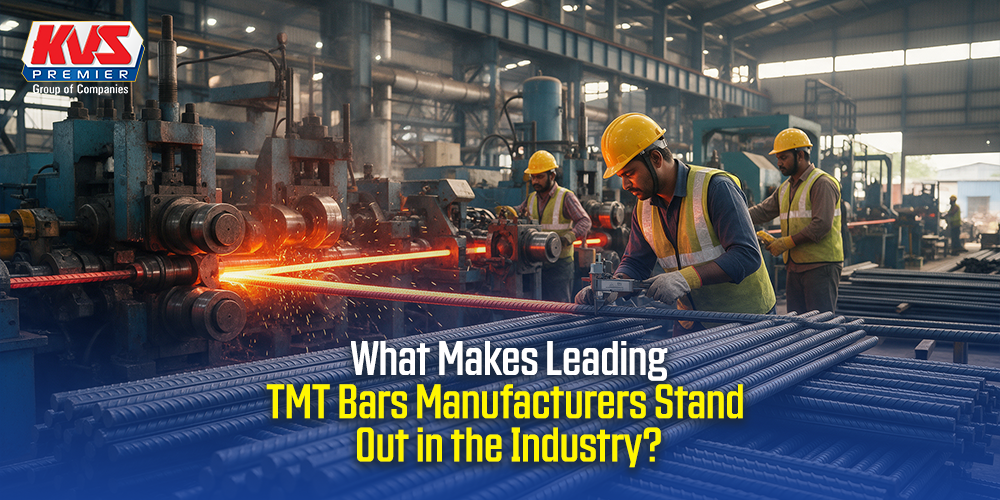
Not every mill that rolls steel bars deserves to call itself a TMT bars manufacturer. The “TMT” in TMT bars stands for Thermo Mechanically Treated, and that treatment is a precise, three stage process. First, the hot rolled bar is quenched rapidly to harden its outer layer. Then, the core heat tempers that layer through self tempering. Finally, the softer inner core cools under controlled conditions.
Reputable TMT manufacturers invest in:
- Automated quenching systems that maintain consistent water pressure and temperature across every single bar, not just the ones a supervisor happens to check.
- In house testing labs that verify yield strength, tensile strength, elongation percentage, and bend or re bend properties on every production batch.
- Raw material traceability, meaning they know exactly which billet, which furnace batch, and which rolling mill run produced the steel in your building.
- ISI certification (IS 1786:2008), which isn’t a marketing sticker. It’s a mandatory quality benchmark enforced by the Bureau of Indian Standards.
When a supplier can’t walk you through these four points confidently, that tells you almost everything about how seriously they take quality.
Why Location and Scale Matter With TMT Manufacturers in India
India’s construction boom has created enormous demand for reinforcement steel, and that demand has pulled in manufacturers of every size, from fully integrated steel plants to small re rolling units working with scrap. This is why the search for reliable TMT manufacturers in India has become more careful, not less, over the last decade.
A large, established TMT bars manufacturer typically sources its own billets or works with consistent, audited suppliers, which means the chemical composition of the steel, including carbon, manganese, sulphur, and phosphorus content, stays within a tight, predictable range. Smaller re rolling units, on the other hand, often blend scrap of unknown origin, which can introduce impurities that weaken the bar’s ductility without changing how it looks on the surface.
That’s the trap. Two TMT bars can appear visually identical, with the same rib pattern, same diameter, and same shine, and still perform completely differently in a real structural load test. This is precisely why TMT manufacturers in India who operate under strict quality control protocols, batch documentation, and third party lab verification are worth the extra diligence during vendor selection.
The Real Cost of Choosing the Wrong TMT Bars Manufacturer
Here’s a number worth sitting with. Reinforcement steel typically accounts for only 12 to 15% of a building’s total construction cost, yet it determines nearly 100% of the structure’s ability to survive an earthquake, a cyclone, or simple long term fatigue. That imbalance is exactly why cutting corners on steel is the worst place to save money on a project.
Substandard bars from an uncertified TMT bars manufacturer tend to fail in three predictable ways:
- Lower yield strength than claimed. The bar bends permanently under loads it was supposed to handle elastically, compromising the entire frame’s load path.
- Poor corrosion resistance. Inconsistent tempering leaves the outer martensite layer thinner in places, letting rust creep in faster, especially in coastal or high humidity regions.
- Inconsistent elongation. During seismic activity, steel needs to stretch and absorb energy rather than snap. Under treated bars behave brittle instead of ductile, which is the opposite of what earthquake resistant design requires.
Multiply that risk across every column, beam, and slab in a multi storey structure, and you understand why engineers insist on certified TMT manufacturers rather than the lowest quote in the tender.
How to Vet a TMT Manufacturer Before You Sign the Order
You don’t need a metallurgy degree to ask the right questions. A few pointed queries will tell you almost everything:
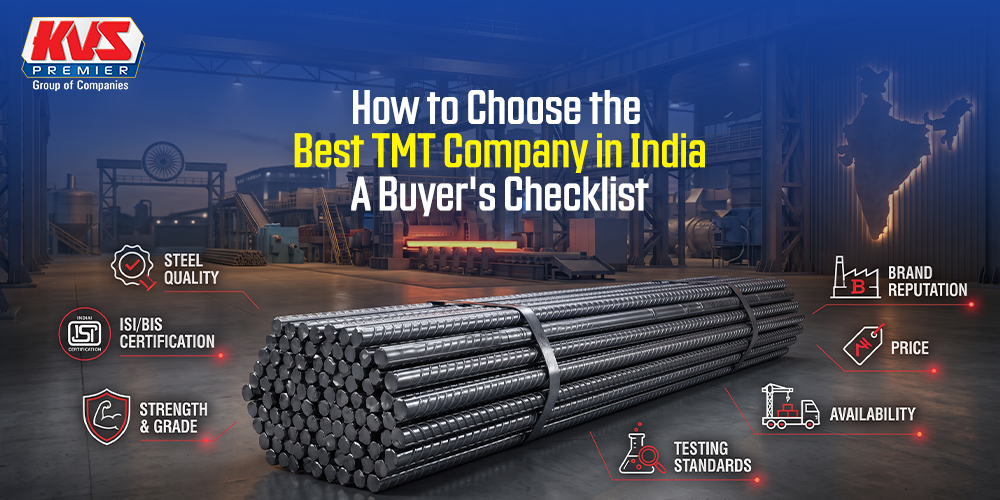
- Ask for the Mill Test Certificate (MTC) for the specific batch being supplied, not a generic brochure figure.
- Request the ISI license number and verify it independently rather than trusting a printed logo.
- Visit the plant if possible, or ask for third party inspection reports from an accredited lab.
- Check the grade compatibility, matching Fe 500, Fe 500D, or Fe 550D against your structural engineer’s specification for your seismic zone.
- Look at consistency across shipments, not just the first sample batch that arrives at your site.
Any credible TMT manufacturers in India will hand over this documentation without hesitation. Hesitation, vague answers, or a simple “trust us” response is the biggest warning sign in this entire process.
Where KVS Fits Into This Picture
At KVS, quality control isn’t a final inspection step. It’s built into every stage of the rolling and treatment process, from raw material selection to batch wise mechanical testing before dispatch. As one of the trusted TMT manufacturers in India, KVS follows IS 1786:2008 specifications strictly, maintains full production traceability, and tests yield strength, elongation, and bend properties on every batch, not just periodic samples.
For architects, contractors, and homeowners comparing TMT manufacturers, that consistency is the difference between steel that meets a spec sheet and steel that actually performs when a structure is put under real stress, whether that’s decades of monsoon exposure or a genuine seismic event. Choosing a dependable TMT bars manufacturer like KVS means your structural drawings and your actual building are finally speaking the same language.
Frequently Asked Questions
What does TMT stand for in TMT bars?
TMT stands for Thermo Mechanically Treated. It describes a three stage manufacturing process involving quenching, self tempering, and atmospheric cooling that gives the bar a hard outer layer and a ductile, energy absorbing core.
How do I verify if a TMT manufacturer is genuine?
Ask for the ISI license number, request a Mill Test Certificate for your specific batch, and confirm the grade (Fe 500, 500D, or 550D) matches your structural engineer’s specification before accepting delivery.
Why do TMT manufacturers in India differ so much in quality?
Scale, raw material sourcing, and testing infrastructure vary widely. Larger, certified manufacturers control billet quality and test every batch, while smaller re rolling units may use mixed origin scrap without consistent lab verification.
Is a higher grade TMT bar always better?
Not automatically. The right grade depends on your project’s seismic zone, load requirements, and structural design. A qualified engineer should specify the grade rather than defaulting to the highest number available.
Conclusion
Choosing between TMT manufacturers isn’t a line item to rush through in a tender comparison sheet. It’s a decision that gets tested every single day your building stands, whether through an earthquake, a flood, or just decades of ordinary wear. The right TMT bars manufacturer protects that investment with certified processes, transparent testing, and consistent quality across every batch, and that’s exactly the standard KVS holds itself to as one of the reliable TMT manufacturers in India. Before you place your next order, ask for the paperwork, check the certification, and build with steel that’s proven, not just promised.
Search
Recent Posts
Leave A Comment