
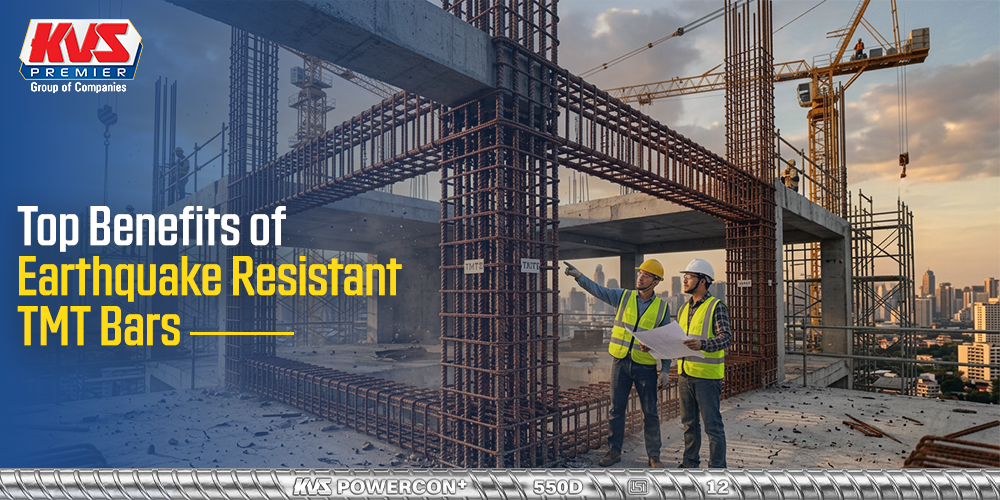
Top Benefits of Earthquake Resistant TMT Bars
India sits on some of the world’s most active seismic zones, and that
reality changes how every building should be designed. Earthquake resistant TMT
bars are the backbone of any structure meant to survive a tremor without
collapsing. If you’re planning a home, a commercial tower, or an infrastructure
project, understanding why these bars matter can save lives, not just money.
In this guide, we’ll break down what makes TMT bars earthquake
resistant, the real benefits they bring to a construction project, how they
compare to standard bars, and what to look for when you’re choosing a supplier.
Why This
Actually Matters: A Quick Reality Check
Structural engineers have long studied why some buildings survive major
tremors while others collapse, and one of the clearest lessons is this:
buildings don’t fail simply because the ground shakes, they fail because the
reinforcement inside them can’t flex with the shaking. Structures built with
brittle, low-ductility steel crack suddenly and give way. Structures with
better-grade, ductile reinforcement bend, absorb the energy, and in many cases
stay standing long enough for people to get out.
That single distinction, between steel that snaps and steel that bends,
is the entire reason earthquake resistant TMT bars exist as a separate product
category.
What Makes
TMT Bars Earthquake Resistant?
TMT stands for Thermo-Mechanically Treated. The manufacturing process
involves rapidly cooling the outer surface of the steel bar while the core
stays hot, which creates a hard outer layer and a soft, ductile core. This
combination gives the bar two things a building needs during an earthquake:
strength to hold its shape, and flexibility to absorb shock without snapping.
Ordinary mild steel bars don’t have this dual structure. Under seismic
stress, they’re more prone to sudden fracture. Earthquake resistant TMT bars,
by contrast, bend and stretch before they break, buying a structure precious
time and stability during ground movement.
Earthquake
Resistant TMT Bars vs. Regular TMT Bars
The difference isn’t just marketing language, it shows up in measurable
properties:
•
Elongation (ductility): Regular TMT bars (Fe 500) offer around 12-14%
minimum elongation, while earthquake resistant bars offer 16% minimum for Fe
500D and 14.5% for Fe 550D.
• Yield-to-tensile ratio: Regular
bars have a higher ratio, meaning less energy absorption, while earthquake
resistant bars have a lower ratio, allowing them to absorb more energy before
failure.
• Carbon content: Regular bars use
standard carbon content, while earthquake resistant bars use lower carbon
content for better ductility and weldability.
• Behavior under seismic load:
Regular bars are prone to brittle failure, while earthquake resistant bars bend
and deform before breaking.
• Recommended zones: Regular bars
are suited to Zones I-II and non-seismic areas, while earthquake resistant bars
are recommended for Zones III, IV, and V, which cover most of India.
• BIS reference: Regular bars are
covered under IS 1786:2008, while earthquake resistant bars fall under IS
1786:2008 with the added ‘D’ grade elongation clause.
The “D” in Fe 500D and Fe 550D specifically denotes
ductility-enhanced grades. If your site falls in Seismic Zone III or higher,
which covers a large part of India including Delhi-NCR, most of the Himalayan
belt, and parts of western India, using standard Fe 500 bars instead of the
D-grade is a design shortcut that shows up as a real risk on paper, not just in
theory.
Key
Benefits of Using Earthquake Resistant TMT Bars
- Superior Ductility Ductility lets steel deform under stress without
cracking. During an earthquake, buildings sway and shift constantly, and
bars with high ductility flex along with the structure instead of
snapping, keeping walls and columns intact when the shaking stops.
- Higher Tensile Strength Earthquake resistant TMT bars typically
fall in the Fe 500D or Fe 550D grade range, offering tensile strength well
above standard reinforcement bars. This lets a structure carry heavier
loads and resist the bending forces generated during lateral shocks.
- Reduced Risk of Structural Collapse Buildings reinforced with these
bars are designed to crack in controlled, predictable ways, a principle
engineers call “strong column, weak beam” design, rather than
collapsing suddenly. That difference is what gives occupants time to
evacuate during a seismic event.
- Compliance with Indian Seismic Codes BIS codes like IS 1786 and IS
13920 assume the reinforcement itself meets ductility standards. Using
certified earthquake resistant TMT bars keeps your project compliant for
approvals, insurance, and liability, and the 3-5% cost premium over
standard bars is minor next to the cost of repairs after a real seismic
event.
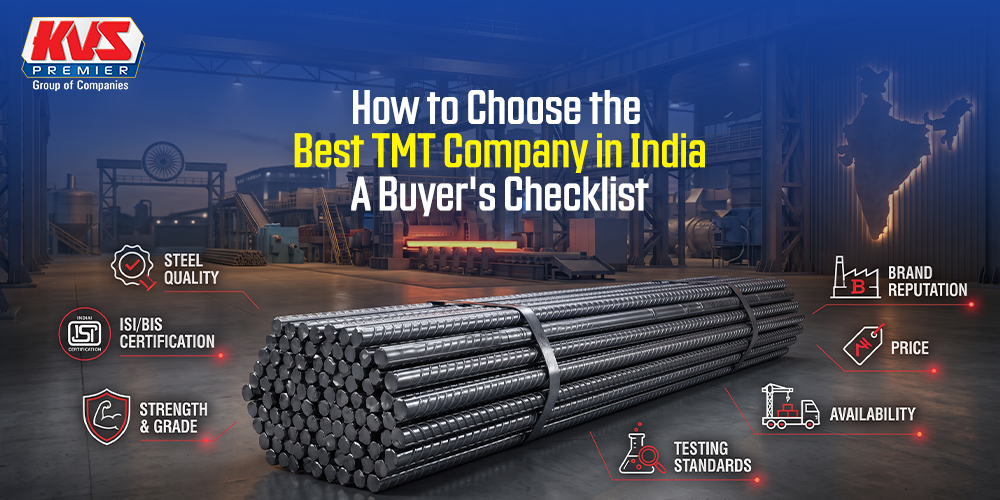
Choosing
the Right TMT Bars Company
Not all reinforcement steel is created equal, and the difference often
comes down to the manufacturing process and quality control at the plant. When
you’re comparing options among the many TMT brands in India, look for a few
non-negotiables:
• BIS certification, which confirms the bars meet IS 1786 standards
• Third-party lab testing reports that verify actual tensile strength and
elongation values, not just what’s printed on the mill certificate
• Consistent bar diameter, since uneven bars weaken structural calculations and
increase steel wastage
• A track record on large projects, since a reliable TMT bars
company should have verifiable project history you can actually check
• Batch-wise traceability, so a specific batch of bars can be traced back to
its test report if there’s ever a dispute or inspection
A trustworthy TMT bars
company will always share test certificates without hesitation. If a supplier
is vague about grading or can’t produce documentation, that’s a red flag worth
taking seriously. This is also where cutting corners tends to hide: two bars
can look identical and still perform very differently under seismic stress
depending on how tightly the manufacturer controlled the cooling process during
production.
Among the established TMT brands
in India manufacturing seismic-grade reinforcement steel, brands like KVS
Premier are recognized for producing TMT bars that meet BIS specifications for
earthquake-prone construction zones.
FAQs
What grade
of TMT bar is best for earthquake resistance?
Fe 500D and Fe 550D grades are generally recommended for seismic zones because
they combine high tensile strength with the ductility needed to absorb shock
during ground movement.
Are
earthquake resistant TMT bars more expensive than regular bars?
They typically cost 3-5% more per tonne, but the difference is small compared
to the long-term safety and reduced repair costs they provide over a building’s
lifespan.
Can
earthquake resistant TMT bars be used in all types of construction?
Yes. They’re suitable for residential buildings, commercial complexes, bridges,
and industrial structures, especially in regions falling under seismic zones
III, IV, and V as per Indian building codes.
How do I
verify if a TMT bar is genuinely earthquake resistant?
Check for BIS certification (IS 1786), ask for third-party lab test reports on
elongation and tensile strength, and confirm the bar grade is Fe 500D or
higher.
What’s the difference between Fe 500D and Fe 550D bars? Fe 550D has
higher tensile strength but slightly lower minimum elongation than Fe 500D. Fe
500D is generally preferred for high-seismic-risk zones because ductility
matters more than raw strength when a structure needs to absorb shock.
Final
Thoughts
Earthquake resistant TMT bars aren’t a luxury add-on, they’re a fundamental
safety requirement for construction in seismically active regions like most of
India. From ductility and tensile strength to code compliance and controlled
failure behavior, the benefits stack up in favor of using certified, high-grade
reinforcement steel on every project.
Before you finalize your next construction order, take the time to vet
your supplier properly. Ask for certifications, compare grades, and choose a TMT bars
company with a proven record in seismic-grade steel. It’s one decision that
pays off the moment the ground starts to shake.
Search
Recent Posts
Leave A Comment